Recognising Financial Stress at Work Malaysia: What Leaders See, What Employees Feel
Most employees who are struggling financially will not tell you. They will show up, do their best, and say everything is fine. In Malaysia especially, that silence runs deep and understanding why the first thing is any leader needs to get right.
The Cultural Barrier Is Real
In the context of Financial Stress at Work Malaysia, culture plays a powerful role.
There is a concept in Malaysian culture called malu– roughly translated as shame or embarrassment and it shapes how people navigate difficulty at work in ways that are easy to underestimate. For an employee carrying debt, an overdue bill, or a growing overdraft, disclosing that to a manager does not feel like asking for help. It feels like an admission of personal failure. In a culture that ties financial stability closely to individual responsibility and family honour, that threshold is extraordinarily high.
The gap between when someone starts struggling and when it becomes visible at work is often measured in months. Employment Hero research found that 49% of Malaysian employees avoid reporting mental health challenges out of fear of consequences. Financial difficulty carries even more stigma than that. By the time it surfaces as a performance issue, the problem is rarely new and the employee has usually been managing it alone for far longer than anyone realised.
What most workplaces offer in response is financial wellness information sessions, budgeting tips, the occasional webinar. That is not nothing. But information alone does not change how people relate to money. Financial behaviour is what actually matters: how an individual manages money day to day, the choices they make under pressure, the habits that either compound stress or reduce it. Wellness educates. Behaviour shapes outcomes.
What You Can Actually Observe
When it comes to Financial Stress at Work Malaysia, no single signal tells the whole story, but patterns do. An employee who used to be sharp in meetings but now seems distracted, who has quietly stopped joining team lunches, who asks about payroll dates a little too often in the days before payday these things individually mean little. Together, especially when they represent a real departure from someone’s normal behaviour, they are worth paying attention to.
Requests for salary advances are perhaps the clearest signal of all. When someone approaches HR or payroll about accessing money they have already earned, something acute is happening. It warrants a private, careful conversation rather than a routine process response.
Other signs worth tracking include increased personal phone use during work hours, a visible drop in the quality of work that was previously reliable, and withdrawal from voluntary social activities often framed as being busy, when the real reason is simply the cost. These are not character flaws. They are often the visible edge of financial behaviour patterns that were formed long before this job, under pressures that had nothing to do with this workplace.
What It Feels Like from the Inside
For employees reading this, the internal experience is worth naming directly. Financial stress at work is exhausting in a way that is genuinely hard to explain to someone who has not lived it. Trying to concentrate on a deliverable while simultaneously calculating whether you can cover your PTPTN repayment, your car loan, and your utility bills this month is not a motivation problem. It is a cognitive bandwidth problem. Research consistently shows that financial anxiety draws on the same mental resources required for focus, decision-making, and creative thinking. The harder you try to push through, the less capacity you have.
There is also what researchers call financial shame spiralling the pattern where the more you think about your situation, the worse you feel, which makes it harder to act, which makes everything feel even more unmanageable, which deepens the shame. What often goes unrecognised in that cycle is that it is fundamentally a behaviour and response pattern.
It can be interrupted. People can learn to notice it, name it, and respond differently. But that only happens when someone helps them build that skill, not just hands them a leaflet about savings accounts.
Understanding this behavioural pattern is key to addressing Financial Stress at Work Malaysia effectively.
Moving Beyond Wellness: Financial Behaviour and Financial Leadership
Addressing Financial Stress at Work Malaysia requires moving beyond traditional financial wellness programmes.
For years, the default employer response to financial stress has been wellness. Bring in a speaker. Share some resources.
Tick the box. The intention is genuine, but the impact is limited, because financial wellness treats the symptom rather than the root.
|
|
The employers who make a lasting difference are the ones who move their people along that progression. Not by lecturing, but by creating the conditions, the tools, the conversations, the supported practice where behaviour can genuinely change and leadership can develop. That is a different kind of employer commitment. And employees notice it.
A practical place to start is understanding where your people actually stand. Reach out to us to explore the Financial Behaviour Assessment and take the first step toward building a team that does not just cope with financial pressure but grows through it. [Get in touch/connect with us →] (your link here)
The Generational Dimension
Financial stress does not land the same way across age groups, and a one-size-fits-all approach will consistently miss the mark. Younger Malaysian employees, particularly those in their mid-twenties to early thirties, entered the workforce during or shortly after the pandemic. Many are juggling PTPTN repayments and car loans while watching the prospect of home ownership move further out of reach. For this group, the priority is building better financial behaviour, early practical debt management, budgeting that works in real life, and the habit of small consistent decisions that accumulate over time.
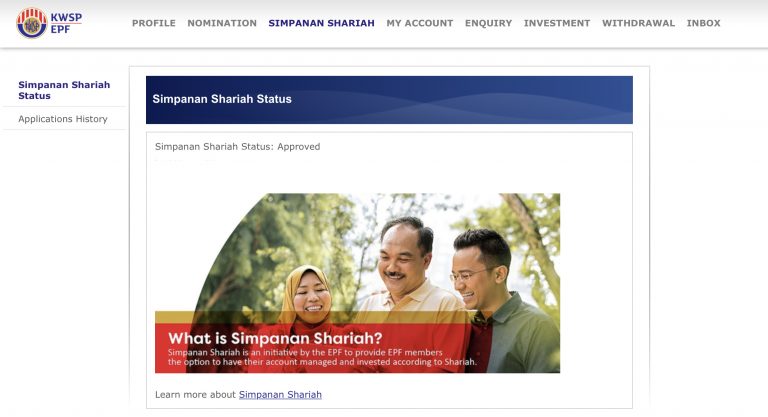
Older employees are navigating something equally pressing but different: the growing concern that EPF savings may not stretch as far as planned, especially given the newer three-account structure and revised benchmarks. What they need is less about basics and more about financial leadership: the confidence to take stock of where they stand, reassess their trajectory, and make deliberate adjustments while there is still time to make them count.
Recognising that distinction is not just good programme design. It is how you show people that the support being offered was actually built with them in mind.
Financial Stress at Work Malaysia: Be the Employer Who Does More
There is a version of this that most organisations are already doing the EAP link in the intranet, the annual wellness month, the manager trained to spot warning signs. That foundation matters.
But the employers who genuinely retain people, who build the kind of trust that shows up in engagement scores and in the conversations, employees have about their workplace, are the ones who go one step further.
They move from telling employees what to do with money to helping them understand how they relate to it. They create space for financial behaviour to be discussed without shame. They invest in tools and programmes that build real capability over time, not just awareness in a single sitting. They treat financial leadership as something that can be developed in every person, at every level.
That kind of employer does not just support people through hard times. They help people become less likely to stay stuck in them. In Malaysia’s current economic climate, with cost-of-living pressure mounting across generations and financial stress quietly eroding performance in workplaces everywhere, that is not a nice-to-have. It is one of the most human things a business can offer.
Addressing Financial Stress at Work Malaysia is no longer optional—it is essential in today’s economic climate.
Start the conversation that matters.
Speak to us today and start shaping financial behaviour and leadership across your organisation.