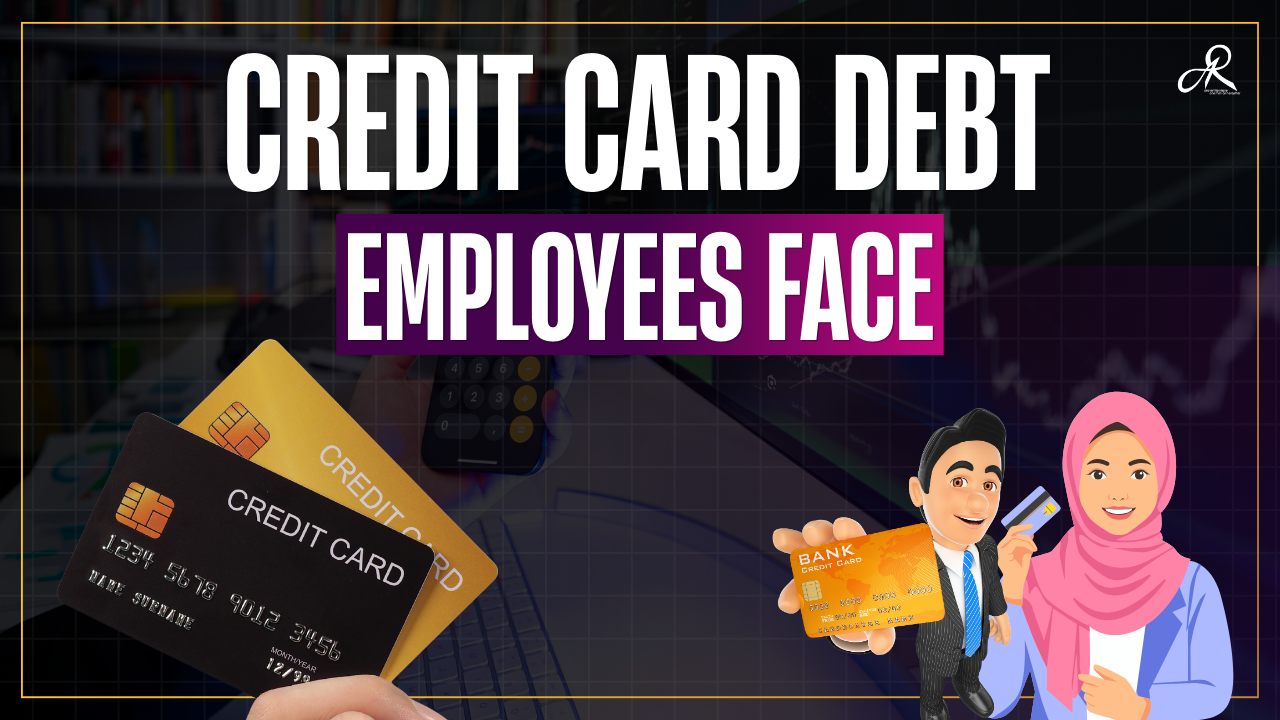
Credit card debt employees face has become one of the most common and least discussed financial pressures in today’s workplace.
Within many organisations, conversations around financial literacy for employees often focus on long term goals or general wellbeing.
What is frequently missed is the day-to-day reality of employees living paycheck to paycheck while managing ongoing credit card debt.
This reality cuts across roles, industries, and income levels.
And while it may appear to be a personal financial issue, its impact is increasingly felt within the workplace.
Credit Card Debt Employees Carry in Today’s Workplace
For many employees, credit card debt did not begin as poor financial behaviour.
It began as a solution.
A way to manage rising living costs.
A way to handle medical bills or education expenses.
A way to support family obligations.
A way to bridge gaps when income timing did not match expenses.
Over time, what started as temporary reliance slowly became persistent credit card debt. Minimum payments felt manageable. Carrying a balance became normal.
For employees living paycheck to paycheck, this cycle often continues quietly, without external signs of struggle.
The Mental Load of Living Paycheck to Paycheck
Paycheck to paycheck living creates a constant background pressure that many employees carry into work.
It affects how people think, decide, and respond.
Employees managing credit card debt often experience ongoing financial stress that consumes mental space. Even when performance remains strong, cognitive energy is divided.
This mental load shows up subtly.
Reduced focus.
Emotional fatigue.
Hesitation in decision making.
Financial literacy for employees matters here because awareness reduces uncertainty. When uncertainty remains unchecked, stress accumulates.
How Credit Card Debt Shapes Workplace Behavior
Employees living paycheck to paycheck often make professional decisions influenced by financial pressure.
They may delay taking leave because income feels essential.
They may avoid role changes due to fear of instability. They may stay in positions longer than they want because predictability feels safer than growth.
These behaviors are often misinterpreted as lack of ambition or engagement.
In reality, they reflect survival mode.
Credit card debt creates urgency without clarity, pushing employees to prioritise short term stability over long term development.
Why This Issue Is Often Invisible to HR and Employers
Credit card debt is rarely disclosed in workplace settings.
Employees fear judgement.
They worry about being seen as irresponsible.
They hesitate to associate financial stress with professional identity.
As a result, many HR teams underestimate how many employees are living paycheck to paycheck due to ongoing credit card debt.
Without visibility, financial literacy for employees may remain too general, missing the specific pressures employees face in real life.
The Organisational Impact of Financial Stress
Financial stress does not remain contained within personal life.
It influences performance, engagement, and wellbeing.
Employees under financial strain often experience reduced concentration, increased absenteeism, and higher burnout risk.
Credit card debt adds an additional layer of urgency because it feels unresolved and ongoing.
From an organisational perspective, this can mean:
Lower productivity despite long working hours.
Talented employees who hesitate to take risks.
Managers addressing symptoms without seeing the root cause.
Financial literacy for employees helps organisations understand that financial stress is not a character issue. It is a context issue.
Why Financial Literacy for Employees Matters More Than Ever
Financial literacy for employees is not about controlling personal choices.
It is about awareness, confidence, and clarity.
Just as organisations support mental health without diagnosing conditions, they can support financial wellbeing without intruding on privacy.
When employers acknowledge credit card debt and paycheck to paycheck living as common experiences, they reduce stigma. Employees feel seen rather than judged.
This creates trust.
Trust improves engagement.
Engagement improves performance.
Performance supports long term organisational sustainability.
Credit Card Debt Is a Signal, Not a Failure
Credit card debt among employees should be viewed as a signal.
A signal of rising costs.
A signal of financial gaps.
A signal that employees are absorbing pressure quietly.
For employers and HR leaders, recognising this signal is part of responsible leadership.
Financial literacy for employees does not fix debt. But it creates understanding. And understanding changes behaviour over time.
Building a Healthier Workplace Through Awareness
Credit card debt employees face has become a common but largely unspoken pressure across many workplaces.
A workplace that acknowledges paycheck to paycheck realities is better positioned to support its people.
Employees who feel financially supported are more present.
More focused.
More confident.
They bring greater emotional capacity to collaboration, leadership, and problem solving.
For employers, addressing credit card debt through financial literacy for employees is not about overstepping boundaries.
It is about recognising reality.
When credit card debt employees carry remains unmanaged, stress accumulates and directly affects engagement and performance.
And organisations that understand this are better equipped to build resilient, engaged, and sustainable workforces.
If you are an employee
When financial pressure becomes common across a team, it becomes an organisational issue.
If credit card debt and paycheck to paycheck stress are affecting your workplace, help surface the conversation.
Share this article with your HR or People team and encourage the introduction of Financial Literacy for Employees in your organisation.
If you are HR, an employer, or a decision maker
Addressing credit card debt employees struggle with is a critical step toward building a financially resilient workforce.
Financial stress does not always appear in reports or surveys, but its impact is real.
Organisations that take financial literacy seriously move beyond surface level wellbeing and address the pressures that truly affect performance and engagement.
Work with us to introduce Financial Literacy for Employees in a way that is structured, respectful, and effective.
👉 Connect with us to explore a tailored proposal for your organisation.