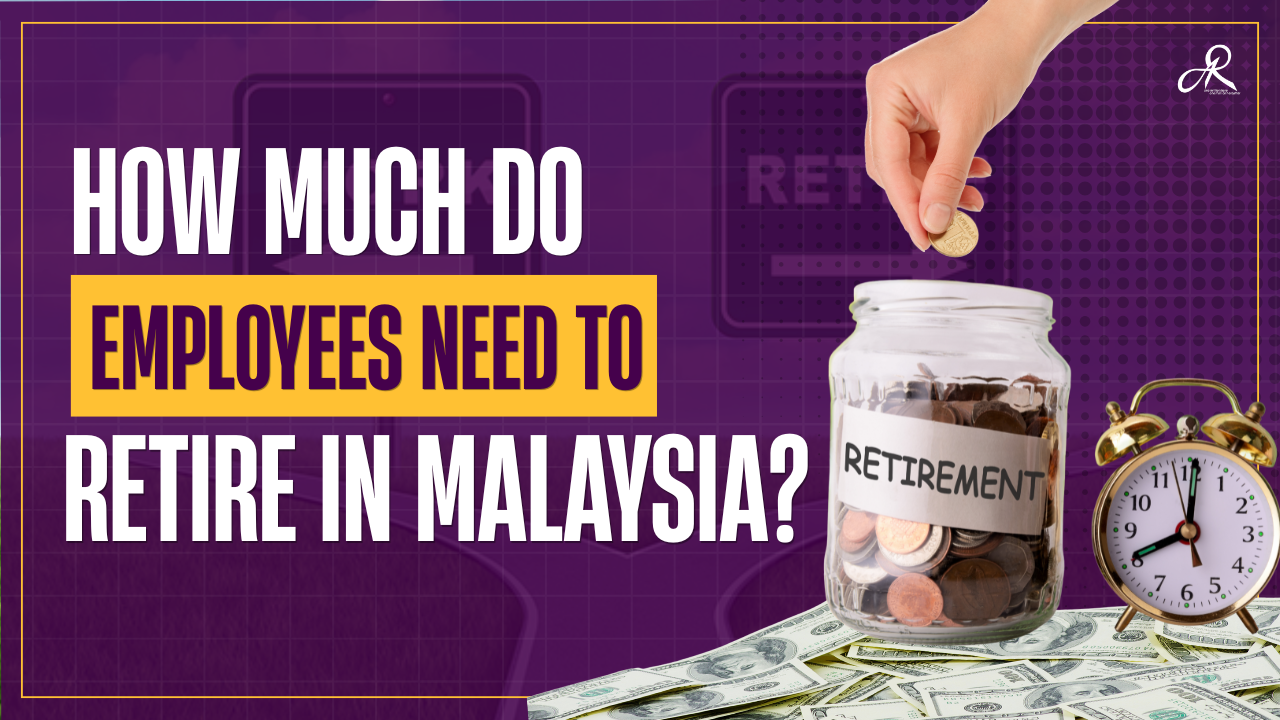
How much do employees need to retire in Malaysia?
It is one of the most searched retirement questions online.
And yet, it is one of the least calculated questions in real life.
Most employees assume.
They estimate.
They round up.
They hope.
Until one day the question stops feeling theoretical.
And starts feeling urgent.
How Much Do Employees Need to Retire in Malaysia?
When people search online, they usually type:
“How much do I need to retire in Malaysia?”
But the more accurate question is:
How much do employees need to retire in Malaysia based on real salaries, rising costs, and longer life expectancy?
Because retirement today is not ten years.
It can easily stretch twenty to twenty five years.
Living expenses do not disappear after work stops.
Housing continues.
Groceries continue.
Utilities continue.
Medical costs often increase.
Inflation never pauses.
Retirement is not about survival.
It is about maintaining dignity and independence.
And that requires more structure than most employees expect.
The Retirement Fantasy Most Employees Believe
Many employees imagine retirement like this:
No alarms.
Morning walks.
Coffee without rushing.
Freedom.
That part is real.
But what disappears with retirement is income.
No monthly salary.
No annual bonuses.
No predictable cash flow.
Expenses retire when you retire.
Income does not.
That is why understanding how much do employees need to retire in Malaysia is not optional. It is essential.
The Most Expensive Thought: “I Still Have Time”
One of the biggest retirement myths is time.
“I’m still young.”
“I’ll plan after my next promotion.”
“I’ll start when my children are older.”
Time feels generous in your 30s and 40s.
But retirement planning is not about age.
It is about runway.
The later you start, the steeper the climb.
And the more pressure you feel when the numbers become real.
Why Even High Income Employees Feel Nervous
Here is something interesting.
Employees earning well are often just as anxious about retirement as those earning modest salaries.
Why?
Because income is not the same as structure.
A high salary without planning is still fragile.
Lifestyle grows.
Commitments expand.
Expectations rise.
Without clarity on how much do employees need to retire in Malaysia, higher income does not automatically translate into long term stability.
It can simply lead to higher spending.
Until work stops.
What Happens If You Stop Working Earlier Than Planned?
Most employees avoid this question.
What if health changes?
What if your industry shifts?
What if caregiving responsibilities increase?
What if burnout forces an early exit?
Retirement does not always happen at a neat, planned age.
Sometimes it happens earlier than expected.
If employees have never seriously considered how much do employees need to retire in Malaysia, early retirement becomes financial shock instead of planned transition.
That uncertainty creates stress long before retirement actually begins.
Many Malaysians Continue Working After Retirement
A recent report titled “Many Malaysians choose or are forced to work after retirement, survey finds” highlights a growing concern.
According to findings reported by The Edge Malaysia, many Malaysians either choose or feel financially compelled to continue working beyond traditional retirement age.
You can read the report here:
👉 https://www.nst.com.my/business/corporate/2026/01/1367020/many-malaysians-choose-or-are-forced-work-after-retirement
This trend is not always driven by passion or purpose.
In many cases, it is driven by insufficient retirement savings, rising living costs, and longer life expectancy.
Which brings us back to the core question.
If many retirees still need to work, then how much do employees need to retire in Malaysia to truly have a choice?
Retirement should be optional work, not mandatory work.
Clarity today determines that difference tomorrow.
Why Retirement Stress Shows Up at Work
Retirement may feel personal.
But financial uncertainty affects workplace behaviour.
Employees unsure about long term stability often:
Avoid career risks.
Stay in roles out of fear.
Work longer hours to feel secure.
Resist organisational change.
From a leadership perspective, this can look like disengagement.
In reality, it is financial anxiety.
Understanding how much do employees need to retire in Malaysia reduces that silent pressure.
Clarity improves confidence.
Confidence improves performance.
Retirement Is Not About Stopping Work
Retirement is not about doing nothing.
It is about choice.
Choice to work part time.
Choice to consult.
Choice to travel.
Choice to rest without guilt.
But choice only exists when finances are structured.
Without structure, retirement becomes dependency.
With structure, retirement becomes freedom.
So, How Much Do I Need to Retire?
There is no single number.
It depends on:
Lifestyle expectations.
Location.
Healthcare needs.
Dependants.
Inflation assumptions.
But here is what is consistent.
Guessing is not a strategy.
Hoping EPF is “probably enough” is not clarity.
Retirement planning requires awareness.
Not fear.
Just visibility.
From Guessing to Knowing
Most employees do not avoid retirement planning because they do not care.
They avoid it because it feels complex.
But complexity reduces when numbers become visible.
Financial literacy for employees transforms retirement from a vague future event into something measurable.
It replaces:
“I think I’m okay.”
With:
“I know where I stand.”
That shift changes behaviour immediately.
When Retirement Becomes an Organisational Issue
Retirement uncertainty is not just personal.
When large numbers of employees lack clarity, it affects workforce behaviour.
Employees may:
Delay internal mobility.
Avoid development opportunities.
Resist structural change.
Stay longer due to fear, not engagement.
Financial stress rarely appears directly in surveys.
But it shapes performance and succession planning.
Organisations that invest in Financial Literacy for Employees build resilience.
They create employees who plan, rather than panic.
Final Thought
If you have ever wondered how much do employees need to retire in Malaysia, you are already asking the right question.
The next step is not guessing.
It is understanding.
Because retirement should not feel like a cliff.
It should feel like a planned transition.
When Retirement Becomes a Workplace Issue
Retirement uncertainty may feel personal.
But when large numbers of employees are unsure whether they are financially prepared, it becomes an organisational concern.
Employees who feel uncertain about retirement often:
Delay development decisions.
Avoid internal mobility.
Resist change that feels financially risky.
Stay longer than planned due to fear, not engagement.
Financial stress does not always appear in engagement surveys.
But it influences confidence, performance, and long-term workforce stability.
Organisations that invest in Financial Literacy for Employees do more than provide education.
They strengthen resilience.
They reduce silent anxiety.
They create employees who plan, rather than panic.
If You Are HR, an Employer, or a Decision Maker
Retirement readiness is no longer just an individual responsibility.
It shapes workforce behaviour, career progression, and succession planning.
Supporting structured retirement awareness programmes demonstrates foresight and leadership.
Partner with us to introduce Financial Literacy for Employees into your organisation in a way that is practical, respectful, and aligned with real workplace needs.
👉 Connect with us to explore a tailored proposal for your organisation.