Only 41.2% of EPF Members Are Retirement-Ready. What Are We Doing About It?
EPF retirement planning Malaysia is becoming an increasingly urgent issue for organisations and employees to understand
The cake gets cut. The speeches are made.
Photos are taken, laughter fills the room, and for a moment, everything feels complete.
And then , quietly – everything changes.
After 30 years of showing up, contributing, and building a career, the farewell party ends. The routine disappears overnight. For many Malaysians, what follows isn’t freedom or relief, it’s uncertainty.
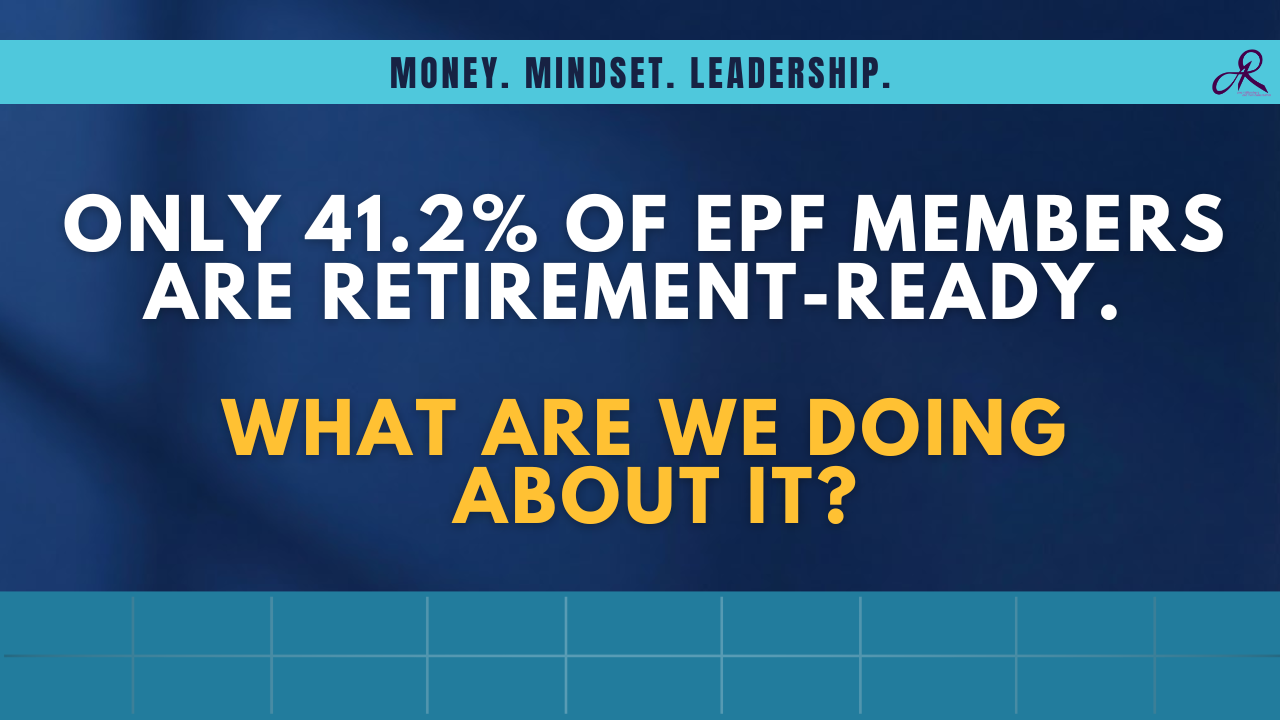
Because according to the latest data from the Employees Provident Fund (EPF) only 41.2% of members are on track to meet the basic retirement savings threshold of RM390,000 by age 60 (as outlined by the Employees Provident Fund (EPF) Retirement Income Adequacy Framework) Source
That means the majority are not.
EPF retirement planning Malaysia is becoming an increasingly urgent issue for organisations and employees to understand
Behind that single number lies a deeper issue.
For decades, many employees were never given a clear understanding of what retirement actually requires. There was no structured guidance on how much is enough, how inflation affects long-term savings, or how long retirement could realistically last.
Even more concerning is the situation for those closest to retirement. Among individuals aged 56 to 60 people already standing at the threshold only a small proportion have reached the basic savings level.
This is not a distant risk. It is a present reality.
This reflects a deeper challenge in EPF retirement planning Malaysia, where preparation often starts too late.
Income Stops. Expenses Don’t.
There is a simple truth about retirement that often goes unspoken: income ends abruptly, but financial obligations continue.
The final paycheck arrives — and then it stops.
But the mortgage remains.
Healthcare costs increase.
Daily living expenses persist.
For many retirees, the savings built over decades are depleted far sooner than expected. What was intended to last through 20 or 30 years of retirement may only stretch a fraction of that time.
Part of the reason this gap persists is rooted in human behaviour. Retirement feels distant and abstract for most of one’s working life. It is easy to assume there will always be more time to prepare — until time runs out.
This is where EPF retirement planning Malaysia becomes critical.
Beyond Personal Responsibility
It is common to frame retirement readiness as an individual obligation: save more, spend less, plan better.
While personal discipline matters, the data suggests that effort alone is not enough. When a majority of employees are unprepared, EPF retirement planning Malaysia becomes a workforce issue.
Employees spend a significant portion of their lives within organisations. These environments influence daily habits, stress levels, and overall wellbeing. Financial outcomes are shaped, in part, by the structures and cultures people operate within.
Organisations, whether intentionally or not, are part of that equation.
What Responsible Organisations Are Doing Differently
Some organisations are beginning to take a more active role in financial wellbeing.
Rather than relying on one-off financial talks, they integrate financial literacy into the employee experience. Conversations about savings, EPF contributions, insurance protection, and long-term planning are made accessible and relevant across different career stages.
This includes early-career employees who may not yet see retirement as urgent, as well as mid-career professionals who are starting to reassess their financial position.
The impact of these efforts extends beyond goodwill.
Employees who feel financially secure are more focused, make clearer decisions, and remain engaged in their roles. Reduced financial stress translates into better performance, stronger retention, and a healthier workplace overall.
Supporting employees’ financial futures is not just a benefit — it is a strategic investment.
Rethinking the Meaning of Retirement
Many organisations take pride in celebrating long service. Retirement ceremonies are thoughtful gestures that recognise years of contribution and loyalty.
But they also invite a difficult question.
If employees leave after decades of service without being adequately prepared for what comes next, what does that celebration truly represent?
Retirement is not a single moment marked by a date. It is a phase of life that can span decades. Without sufficient preparation, it becomes a period defined by financial uncertainty rather than stability.
The EPF statistics are not abstract figures. They reflect real individuals who may face difficult trade-offs in healthcare, lifestyle, and independence.
This is not just a policy concern. It is a leadership one.
A Question Worth Asking
In the next leadership discussion, consider asking:
Are we helping our people prepare not just for their next role, but for the years that follow their final one?
Addressing this does not require large-scale transformation. It begins with awareness and intent. Financial wellbeing can be embedded into organisational culture in the same way as performance, development, and safety.
Because ultimately, the responsibility of an organisation extends beyond employment.
The most meaningful support it can provide is not just helping someone reach retirement — but ensuring they are able to live it with security, dignity, and peace of mind.
What is your organisation doing to support retirement readiness? The conversation is long overdue — and it starts with us.