Employee investment education is no longer a personal finance topic.
It is a structural capability issue inside many organisations.
When companies talk about wellbeing, the focus often stays on outings, family days, and health initiatives.
Those initiatives matter.
But there is another gap growing quietly within the workforce.
Financial literacy beyond budgeting.
Most financial wellbeing programmes stop at spending control.
Spend wisely.
Reduce debt.
Manage expenses.
Important.
But not enough.
Because long-term stability is not built by controlling spending alone.
It is built by growing assets.
And that is where employee investment education becomes critical.
The Silent Gap in Employee Investment Education
Many employees are earning consistently.
They contribute to EPF.
They may maintain savings.
But very few understand investing with clarity, discipline, or structure.
This is not about intelligence.
It is about exposure.
Most employees were never taught:
How investing works.
How risk is managed.
How compounding builds long-term growth.
How asset allocation reduces volatility.
Without employee investment education, hesitation becomes the norm.
And hesitation compounds.
Fear Is Driving Financial Inaction
One of the largest barriers to investing is fear.
Employees worry:
What if I lose everything?
What if markets crash?
What if I choose wrongly?
So they default to savings accounts.
It feels safe.
But safety without growth erodes purchasing power.
Inflation reduces value quietly over time.
Without employee investment education, employees often overestimate market risk and underestimate long-term inflation risk.
That imbalance creates fragility.
EPF Dependency and Limited Awareness
Many employees assume EPF alone will be sufficient.
Few calculate:
How long retirement may last.
How healthcare costs may escalate.
How inflation compounds over 25 to 30 years.
When EPF becomes the only strategy, retirement becomes exposed.
Employee investment education reduces overdependence on a single retirement mechanism.
And that matters for workforce planning.
Employees who cannot retire when expected affect succession pipelines.
Career mobility slows.
Organisational renewal becomes harder.
The Postponement Pattern
A common mindset:
“I will invest when I earn more.”
But when income rises, lifestyle usually rises too.
Commitments expand.
Spending increases.
Savings remain thin.
Without employee investment education, income growth does not automatically convert into asset growth.
Time is the most powerful force in investing.
And time lost cannot be recovered.
When Employee Investment Education Becomes a Business Issue
At first glance, investing appears personal.
But widespread lack of investment awareness influences workplace behaviour.
When employees rely entirely on salary:
Risk tolerance declines.
Career mobility reduces.
Innovation slows.
Change feels threatening.
Financial exposure shapes decision-making.
Employees may avoid stretch assignments.
They may resist internal transfers.
They may hesitate to enter leadership pipelines.
Not because they lack capability.
But because financial insecurity narrows their comfort zone.
When employee investment education is weak, organisational agility weakens.
Retirement Anxiety Is Often an Education Gap
Retirement readiness is not just about saving.
It is about growth.
Without employee investment education, long-term financial uncertainty increases with age.
That uncertainty shows up in:
Delayed retirement.
Reduced succession flexibility.
Longer tenure driven by fear instead of engagement.
This affects workforce sustainability.
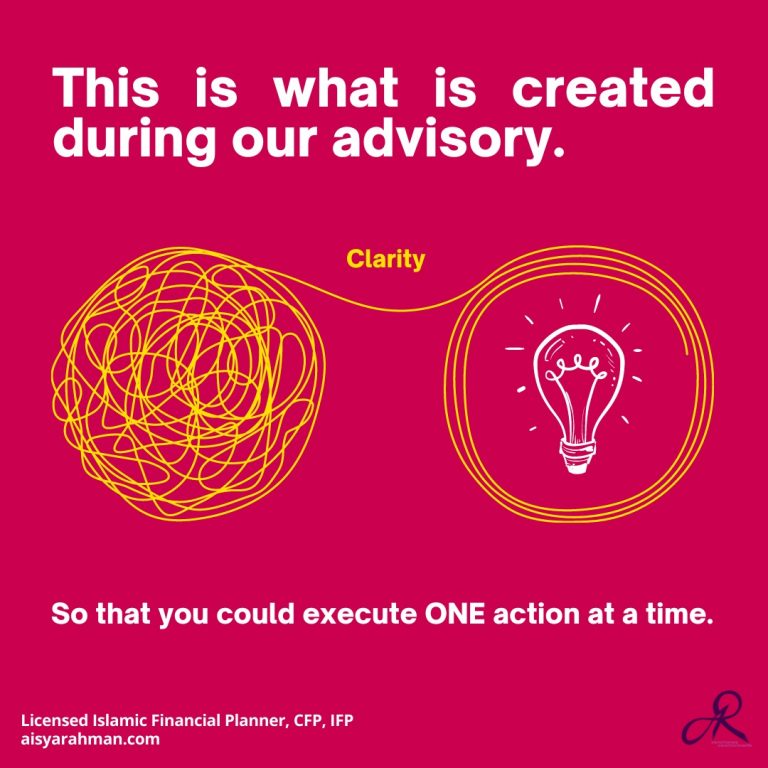
The Core Issue: Clarity
This is not a motivation problem.
It is not a discipline problem.
It is a clarity problem.
Employees are not unwilling.
They are uncertain.
Uncertainty creates hesitation.
Hesitation creates inaction.
Inaction creates exposure.
Employee investment education reduces that exposure by replacing fear with structured understanding.
A Strategic Question for Organisations
Are employees building assets?
Or relying entirely on income?
If most of the workforce depends solely on monthly salary, financial fragility becomes systemic.
Systemic fragility reduces:
Agility.
Leadership readiness.
Succession flexibility.
Long-term resilience.
Employee investment education is not a financial trend.
It is infrastructure.
For stability.
For workforce confidence.
For sustainable growth.
Organisations that strengthen employee investment education are not offering perks.
They are strengthening capability.
And capable employees build resilient organisations.
What Forward-Thinking Organisations Will Do Next
Financial fragility inside a workforce does not announce itself.
It shows up gradually.
In lower mobility.
In cautious leadership behaviour.
In delayed retirement transitions.
In reduced innovation appetite.
By the time the symptoms are visible, the structural weakness is already embedded.
Organisations that think long term do not wait for financial stress to surface in engagement surveys.
They address it upstream.
Investment literacy is not about encouraging employees to trade.
It is about strengthening financial resilience at scale.
A financially resilient workforce:
Makes clearer decisions.
Handles change with more confidence.
Transitions roles more smoothly.
Plans careers with long-term vision.
This is not a welfare initiative.
It is strategic workforce development.
If your organisation is serious about building leadership pipelines, strengthening succession planning, and increasing organisational agility, then financial capability must be part of the conversation.
Because income alone does not build resilience.
Assets do.
And resilient people build resilient organisations.
If you are shaping workforce strategy, now is the time to assess whether investment literacy is part of your capability framework.
Let us design a structured Financial Literacy for Employees initiative that strengthens long-term stability across all levels of your organisation.
The question is not whether your employees are earning.
The question is whether they are building.
Connect with us to explore a tailored, corporate-ready programme aligned with your organisational goals.